
 한국어
 日本語
 简体中文
 Español
How to Lower LDL Cholesterol With Diet: Foods to Cut, Foods to Add + 7 Swaps
The key to lowering LDL cholesterol with food is simple: eat less saturated and trans fat, and more soluble fiber and healthy fats. The World Health Organization (WHO) recommends keeping saturated fat at 10% of your daily calories or less, and the soluble fiber found in oats, barley, beans and many fruits and vegetables may help bring LDL down. Below you'll find the LDL ranges, which foods to cut back on and which to add, 7 practical swaps, and a sample day of eating.
What is LDL cholesterol, and what's a normal level?
LDL (low-density lipoprotein) cholesterol is the particle that carries cholesterol made by the liver out to the rest of the body. When there's too much of it in the blood, it can build up in artery walls and contribute to atherosclerosis, which is why it's often called "bad" cholesterol (National Heart, Lung, and Blood Institute, NHLBI).
| LDL cholesterol | mg/dL | mmol/L |
|---|---|---|
| Optimal | Below 100 | Below 2.6 |
| Near optimal | 100–129 | 2.6–3.3 |
| Borderline high | 130–159 | 3.4–4.1 |
| High | 160–189 | 4.1–4.9 |
| Very high | 190 or above | 4.9 or above |
These categories come from the U.S. National Cholesterol Education Program (NCEP) and are widely used around the world. But the right target is different for everyone. If you have diabetes or heart disease, or several risk factors such as smoking or high blood pressure, your doctor may aim for a lower number. Set your own goal with your doctor based on your test results. If your LDL is very high, such as 190 mg/dL or more, it may have a genetic cause (familial hypercholesterolemia), so be sure to get checked.
Which foods raise LDL? Start with saturated and trans fat
When it comes to food, the biggest drivers of LDL aren't the cholesterol in food so much as saturated fat and trans fat. In its 2023 guideline, the WHO recommended that both adults and children keep saturated fat to 10% of daily calories or less and trans fat to under 1%.
| Daily calories | Saturated fat (≤10%) | Trans fat (<1%) |
|---|---|---|
| 1,600 kcal | About 18 g or less | Under about 1.8 g |
| 2,000 kcal | About 22 g or less | Under about 2.2 g |
| 2,400 kcal | About 27 g or less | Under about 2.7 g |
(Based on 9 calories per gram of fat. The American Heart Association (AHA) suggests that people who need to lower LDL go further and aim for about 5–6% of calories from saturated fat.)
Foods high in saturated fat: fatty cuts of red meat (ribs, marbled steaks, ground beef with a high fat percentage), processed meats like sausage, bacon, salami and hot dogs, butter, cheese and cream, coconut oil and palm oil, and pastries, cookies and cakes.
Foods that may contain trans fat: margarine or shortening made with partially hydrogenated oils, and some fried foods, crackers and baked goods. Many countries now restrict these oils, but it's still worth checking that the label says "0 g trans fat" and that "partially hydrogenated oil" isn't on the ingredient list.
How much of this meal can I have today? One photo and the AI tells you →Which foods help lower LDL?
Filling the space left by saturated fat with the foods below gives you the best chance of seeing a change.
- Soluble fiber: oats, barley, beans, lentils, apples, citrus fruits, eggplant and okra. Soluble fiber may help reduce how much cholesterol is reabsorbed from the gut. In a meta-analysis of 28 randomized controlled trials, eating 3 g or more of oat beta-glucan a day lowered LDL by about 0.25 mmol/L (roughly 10 mg/dL) on average (Am J Clin Nutr, 2014).
- Unsaturated fats: plant oils such as olive and canola oil, nuts (a small handful, about 30 g, a day) and avocado.
- Oily fish: salmon, mackerel and sardines are a great way to get protein without much saturated fat. Twice a week is a commonly recommended amount.
- Beans and tofu: they replace meat as a protein source while being low in saturated fat.
- Vegetables and fruit: aim for at least one at every meal. They naturally boost your fiber.
7 swaps you can make today
| Instead of | Try | Why |
|---|---|---|
| Butter or stick margarine | Olive or canola oil | Saturated/trans fat → unsaturated fat |
| Sausage, bacon, deli meat | Fish, tofu, beans | Processed meats are high in saturated fat and sodium |
| Fatty cuts of meat | Chicken breast, lean cuts, trimmed fat | The cut makes a big difference in saturated fat |
| White bread, refined cereal | Oatmeal, barley, whole grains | Adds soluble fiber |
| Chips and cookies | A handful of nuts or fruit | Cuts saturated fat from snacks |
| Cream sauce, lots of cheese | Tomato sauce, a little cheese | One sauce can change the saturated fat a lot |
| Deep-fried foods | Grilled, steamed or air-fried | Less batter and frying oil |
You don't have to change everything at once. Swapping the one thing you eat most often is what tends to stick.
A sample day of eating for lower LDL
| Meal | Menu | Why it helps |
|---|---|---|
| Breakfast | Oatmeal with apple slices and a handful of walnuts | Beta-glucan and nuts |
| Lunch | Big salad with chickpeas, olive oil dressing and a whole-grain roll | Beans and unsaturated fat |
| Snack | Plain yogurt and an orange | Instead of chips or cookies |
| Dinner | Baked salmon, barley or brown rice, roasted vegetables | Oily fish and whole grains |
When you eat out, choose grilled fish, burrito bowls with beans and salsa, or broth-based soups over fried dishes and creamy pastas. If you order meat, go for lean cuts and pile on the vegetables. At a burger place, a single patty without cheese and bacon makes a real difference. If blood sugar is also on your mind, see eating order for blood sugar, and if you're concerned about liver health, read foods for fatty liver too.
3 common myths
- "Eggs are pure cholesterol, so I have to avoid them." Dietary cholesterol tends to have a smaller effect on LDL than saturated fat. The AHA says healthy people can include about one egg a day as part of a healthy diet. People respond differently, though, so check with your doctor.
- "Coconut oil is a plant oil, so it's fine." Coconut oil and palm oil come from plants, but they're high in saturated fat.
- "Thin people don't need to worry about cholesterol." LDL can be high at any weight, depending on genetics and eating habits. Regular blood tests are the only way to know.
A checklist to start today
- ☐ Did you have a whole grain like oats or barley at breakfast?
- ☐ Did you skip processed meats (sausage, bacon, deli meat) today?
- ☐ Did you cook with plant oil instead of butter?
- ☐ Did you swap chips or cookies for nuts or fruit?
- ☐ Have you planned two fish meals this week?
FAQ
How much can diet alone lower LDL?
It varies from person to person. Cutting saturated fat and adding fiber often brings LDL down, but if your high LDL is genetic, diet alone may not be enough. Stick with the changes for a few weeks to a few months, then retest and review the results with your doctor.
If I take a statin, do I still need to watch my diet?
Yes. Most guidelines recommend healthy eating alongside medication. And never reduce or stop your medication on your own just because you've changed your diet. Always talk to your doctor before making any change to your medicine.
Does losing weight lower LDL?
If you're carrying extra weight, losing some may help your cholesterol numbers. Triglycerides in particular tend to respond well to weight loss. Gradually trimming portions is more sustainable than crash dieting.
Should I take supplements like plant sterols or omega-3?
Some research shows that products with added plant sterols or stanols can lower LDL slightly, but changing your diet comes first. Supplements can interact with medications, so talk to your doctor or pharmacist before choosing one.
Try it with Drop The Weight
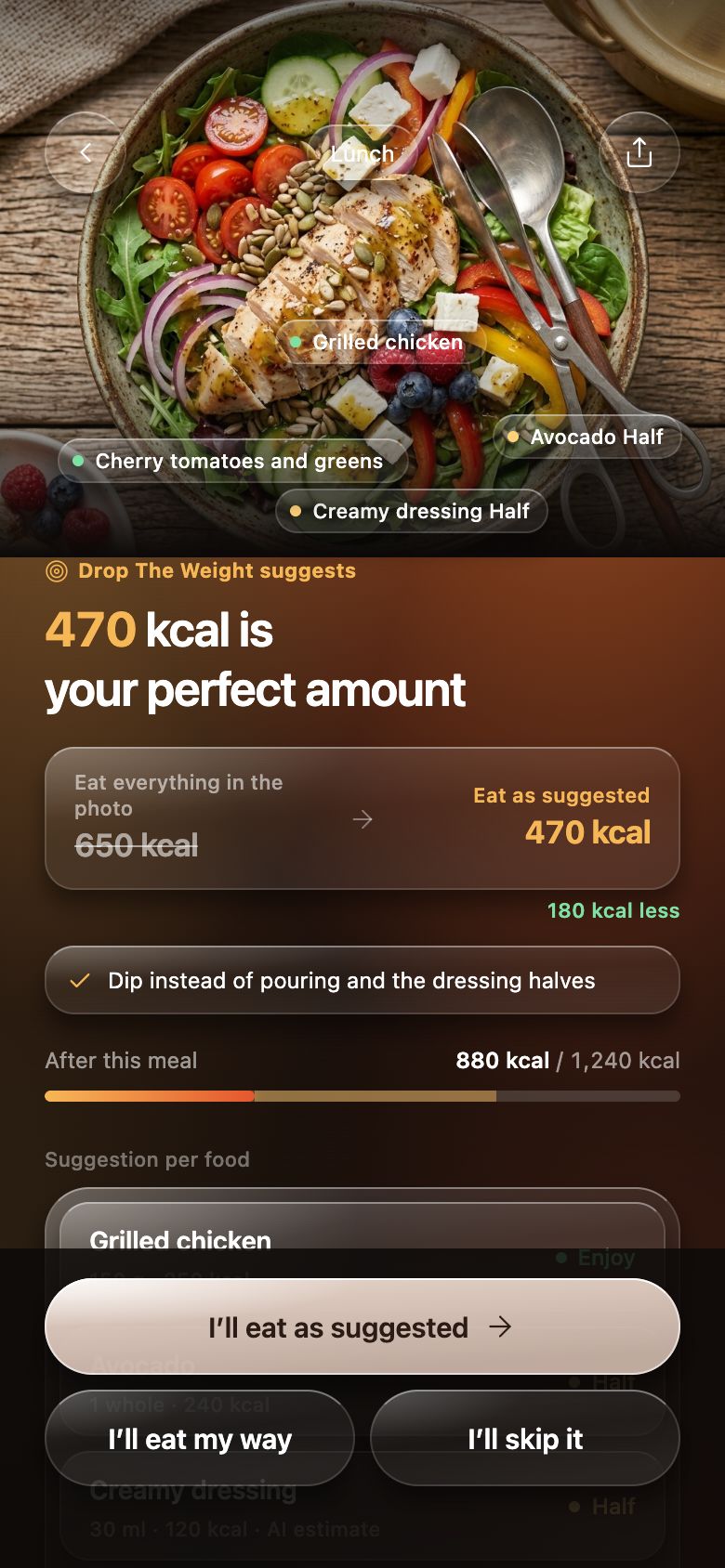
- Snap one photo before you eat and see calories, carbs, protein and fat for each item, so high-fat dishes stand out at a glance.
- For packaged foods like butter, cheese and cookies, scan the barcode or nutrition label to check the fat right away (barcode scans are always free).
- Weekly and monthly reports with your DTW score help you spot the foods you eat most often and keep your swaps going.
Snap before you eat
One photo tells you Enjoy · Half · Just 1/3 for every dish
AI estimates each dish and fits it to the calories you have left today. No sign-up needed.
 Get the iPhone appFree on the App Store · Android soon
Sources
- World Health Organization (WHO), Saturated fatty acid and trans-fatty acid intake for adults and children: WHO guideline (2023)
- National Heart, Lung, and Blood Institute (NIH NHLBI), Blood Cholesterol · TLC Diet
- American Heart Association (AHA), Cholesterol · Saturated Fat
- Whitehead A et al., Cholesterol-lowering effects of oat β-glucan: a meta-analysis of randomized controlled trials, Am J Clin Nutr (2014)
This article is general nutrition information and does not replace diagnosis or treatment. If you have a medical condition or take medication, talk to your doctor or a dietitian before changing your diet. Drop The Weight is a meal logging and guidance app, not a medical device.