
 한국어
 日本語
 简体中文
 Español
Acid Reflux Diet: Foods to Avoid, Foods to Eat and the 3-Hour Rule
The core of an acid reflux diet is simple: eat smaller meals, cut back on fatty foods and finish eating 2–3 hours before you go to bed. Coffee, alcohol, chocolate and spicy foods are well-known triggers, but they don't bother everyone equally, so the real goal is to find the foods that set off your symptoms. Below you'll find a chart of foods to avoid and foods that tend to be easier, a sample day of meals and tips for ordering when you eat out.
What causes acid reflux?
Gastroesophageal reflux disease (GERD) is a condition in which stomach contents flow back up into the esophagus and cause troublesome symptoms such as heartburn and regurgitation. Between your stomach and esophagus sits a ring of muscle called the lower esophageal sphincter that works like a one-way valve. When that valve relaxes at the wrong time, or when there's a lot of pressure on your stomach, acid can travel upward.
A 2018 meta-analysis in the journal Gut found that about 13% of adults worldwide have reflux symptoms at least once a week. It's very common, and a lot of it responds to changes in everyday habits.
| What it feels like | Common symptom |
|---|---|
| A burning feeling in the middle of the chest or upper belly | Heartburn |
| Sour or bitter liquid rising into the throat or mouth | Regurgitation |
| Coughing or burning that starts when you lie down | Worse at night |
| A lump-in-the-throat feeling or a hoarse voice | Throat symptoms |
The most common things that make symptoms worse are large meals, fatty meals, lying down right after eating, extra body weight and smoking. In a study of about 10,000 U.S. nurses (NEJM, 2006), reflux symptoms became more frequent as body mass index (BMI) went up, and even within the normal weight range, gaining weight was linked to more symptoms.
What foods should you avoid with acid reflux?
The NIDDK, part of the U.S. National Institutes of Health, lists the foods below as ones that can make symptoms worse for some people. The ACG guideline, however, recommends cutting back only on the foods that actually trigger your symptoms rather than eliminating everything on the list at once.
Common triggers, why they may bother you and what to try instead:
- Fried food, fatty meat, cream sauces: Fat stays in the stomach longer and may relax the valve. Instead: Grilled, baked, steamed or boiled; lean meat and fish.
- Coffee and strong tea: Causes heartburn in some people. Instead: Weaker brews, smaller cups, not on an empty stomach.
- Alcohol: Relaxes the valve and irritates the esophagus. Instead: Cut down or take a break.
- Chocolate and peppermint: May relax the valve. Instead: Fruit or plain yogurt.
- Spicy food: Irritates an esophagus that's already sensitive. Instead: Turn the heat down a notch.
- Tomatoes and citrus: High in acid; some people feel a burn. Instead: Bananas, apples, melon.
- Fizzy drinks: Bloat the stomach and may raise pressure. Instead: Water or a warm herbal tea.
What foods are good for acid reflux?
No single food cures reflux. But foods that are low in fat, gentle on the stomach and easy to portion are usually well tolerated.
- Whole grains: oatmeal, brown rice, whole-wheat bread and quinoa. The fiber helps you stay full longer.
- Vegetables: broccoli, spinach, zucchini, carrots, green beans, potatoes and sweet potatoes, steamed or roasted rather than fried.
- Protein: eggs, tofu, white fish, skinless chicken and beans, grilled or baked instead of fried.
- Fruit: low-acid choices like bananas, apples, pears and melon.
- Dairy: plain yogurt and low-fat milk. Go easy on high-fat cheese and cream.
How long before bed should you stop eating?
Try to finish eating 2–3 hours before you lie down. Both the ACG and the NIH give the same window. Lying down with a full stomach makes it much easier for acid to flow back into the esophagus.
| Bedtime | Finish dinner by |
|---|---|
| 11 p.m. | 8–9 p.m. |
| Midnight | 9–10 p.m. |
| 1 a.m. (late night) | 10–11 p.m. |
If you get hungry later: Half a banana or a warm herbal tea / A small cup of plain yogurt / Two or three plain crackers
- Keep dinner light: If dinner is your biggest meal of the day, night-time symptoms tend to increase. Eat a bit more at lunch and less in the evening.
- Stay upright after eating: Sit, or take an easy walk, instead of heading straight to the couch or bed.
- If symptoms wake you up: Raise the head of your bed by 6–8 inches (15–20 cm) with blocks or use a wedge pillow. Stacking regular pillows mostly bends your neck and back and doesn't help much. Small studies have found less reflux when people sleep on their left side compared with their right.
Acid reflux meal plan: a sample day
| Menu | Meal |
|---|---|
| Oatmeal with banana and a boiled egg | Breakfast |
| Brown rice, baked white fish, steamed vegetables and a green salad | Lunch |
| Plain yogurt and half an apple | Snack |
| Baked tofu or chicken, roasted sweet potato and a salad with a little olive oil | Dinner |
What each meal is doing:
- Breakfast: Eat before coffee, not coffee on an empty stomach.
- Lunch: Make this your most filling meal.
- Snack: Instead of chips or chocolate.
- Dinner (3 hours before bed): About two-thirds the size of lunch.
Rather than eating until you're stuffed, aim to stop when you feel about 80% full. Less food in the stomach means less pressure on that valve.
How to order when you eat out
- Look at how it's cooked first: Choose grilled, baked, steamed or broth-based dishes over fried and sautéed ones.
- Sauce on the side: Ask for cream, spicy or tomato sauces on the side and use just a little.
- Eat half: With big restaurant portions, set half aside or box it up before you start.
- Drink water: Skip soda and alcohol, or limit yourself to one drink.
- Late dinners and parties: If you can't avoid a late meal, keep drinks to one or two and start with the less greasy dishes.
If weight is part of the picture too, getting enough protein at each meal, as explained in How Much Protein Do You Need a Day?, keeps you full longer and may help you avoid overeating.
3 common myths about acid reflux
- "A glass of milk cures heartburn." It may feel soothing for a moment, but the effect doesn't last, and full-fat milk can actually make symptoms worse. Don't count on it as a fix.
- "With reflux, you have to give up every food you love." Triggers vary from person to person. Keeping a food diary for one to two weeks and cutting back only on the foods that really cause symptoms is much easier to stick with.
- "As long as I avoid spicy food, I'm fine." For many people, overeating, late dinners and fatty meals matter more than spice.
Your checklist for today
- ☐ Did you finish dinner 2–3 hours before bed?
- ☐ Was dinner smaller than lunch?
- ☐ Did you stay upright after eating?
- ☐ Did you choose grilled or steamed over fried?
- ☐ Did you write down when symptoms happened and what you ate?
FAQ
Can diet alone fix acid reflux?
Changing how much you eat, when you eat and your body weight often reduces symptoms. But diet doesn't replace medical treatment. If you have symptoms more than twice a week, or they keep going for several weeks, see a doctor.
Can I stop my acid reducer once I feel better?
No. Stopping suddenly can bring symptoms back, sometimes worse than before. Always talk with your doctor before lowering the dose or stopping any medication.
Do I have to give up coffee completely?
Not necessarily. If coffee gives you heartburn, try a smaller cup, a weaker brew and never drinking it on an empty stomach. Some people with reflux tolerate coffee just fine.
When should I see a doctor right away?
Get medical care promptly if you have trouble swallowing or pain when swallowing, unexplained weight loss, vomiting blood, black stools, or chest pain. Chest pain can also be a sign of a heart problem.
Try it with Drop The Weight
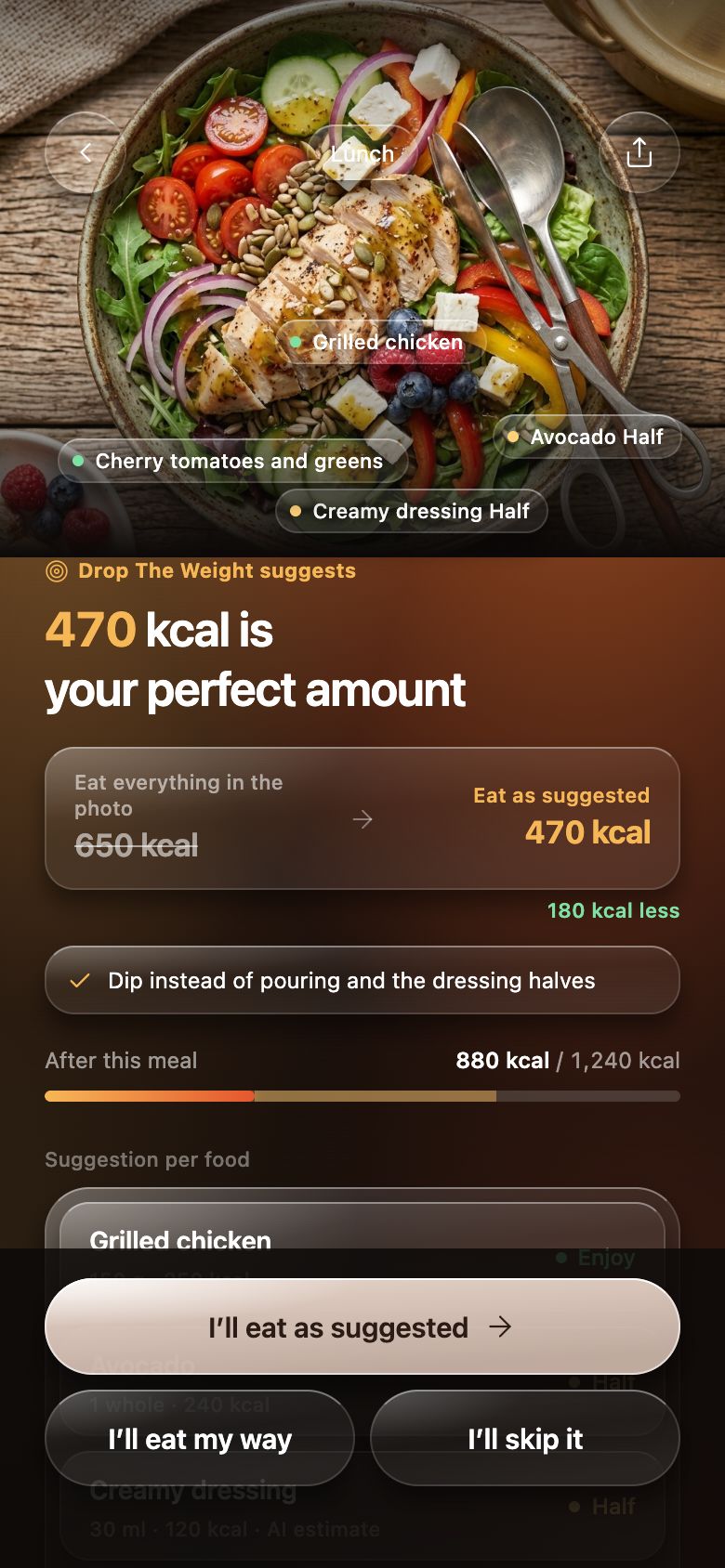
- Snap one photo before you eat and see calories, carbs, protein and fat for each item, so you can spot a heavy, fatty meal right away.
- Based on your remaining calories, the app suggests eat freely, half or a third, which makes it easier to cut back on big portions and late dinners.
- Daily and weekly reports with your DTW score let you look back at when and how much you ate, and weight tracking keeps your goal weight in view.
Snap before you eat
One photo tells you Enjoy · Half · Just 1/3 for every dish
AI estimates each dish and fits it to the calories you have left today. No sign-up needed.
 Get the iPhone appFree on the App Store · Android soon
Sources
- Katz PO et al., ACG Clinical Guideline for the Diagnosis and Management of Gastroesophageal Reflux Disease, Am J Gastroenterol (2022)
- National Institute of Diabetes and Digestive and Kidney Diseases (NIDDK, NIH), Eating, Diet & Nutrition for GER & GERD
- Eusebi LH et al., Global prevalence of, and risk factors for, gastro-oesophageal reflux symptoms: a meta-analysis, Gut (2018)
- Jacobson BC et al., Body-mass index and symptoms of gastroesophageal reflux in women, N Engl J Med (2006)
This article is general nutrition information and does not replace diagnosis or treatment. If you have a medical condition or take medication, talk to your doctor or a dietitian before changing your diet. Drop The Weight is a meal logging and guidance app, not a medical device.