
 한국어
 日本語
 简体中文
 Español
How Much Sodium Per Day? The 2,000 mg Limit + 7 Ways to Cut Back
The World Health Organization (WHO) recommends that adults eat less than 2,000 mg of sodium a day, which works out to about 5 g of salt — just under a teaspoon. Most of the sodium we eat doesn't come from the salt shaker; it comes from packaged foods, restaurant meals, sauces and soups. Adjusting just those four can make a big difference. Below you'll find the key numbers, how to read a Nutrition Facts label, and 7 ways to cut back starting today.
How much sodium should you have per day?
Sodium is the main component of salt (sodium chloride). It's an essential mineral that helps your body balance fluids and keeps nerves and muscles working. But eating a lot of it makes blood pressure more likely to rise, which is why WHO recommends adults stay under 2,000 mg a day. The Dietary Guidelines for Americans and the FDA use a slightly higher upper limit of 2,300 mg, and the American Heart Association says an ideal limit for most adults is 1,500 mg.
| Guideline | Sodium | As salt |
|---|---|---|
| WHO recommendation | Less than 2,000 mg | Less than about 5 g (just under a teaspoon) |
| US label Daily Value (FDA) | 2,300 mg | About 5.8 g (about 1 teaspoon) |
| AHA ideal limit | 1,500 mg | About 3.8 g |
| How to convert | Sodium (mg) × 2.5 | = salt (mg) |
For example, if a label lists 800 mg of sodium, that's about 2 g of salt. Going the other way, 5 g of salt is about 2,000 mg of sodium. According to the FDA, Americans eat about 3,400 mg of sodium a day on average, so most of us have room to cut back.
Why is too much sodium a problem?
When you eat a lot of sodium, your body holds on to more water, which increases the volume of blood in your blood vessels and makes blood pressure more likely to rise. That's why the American Heart Association lists eating less sodium among the key lifestyle habits for healthy blood pressure.
| Category (AHA) | Systolic (top number) | Diastolic (bottom number) |
|---|---|---|
| Normal | Less than 120 | and less than 80 |
| Elevated | 120–129 | and less than 80 |
| High blood pressure, stage 1 | 130–139 | or 80–89 |
| High blood pressure, stage 2 | 140 or higher | or 90 or higher |
Blood pressure isn't judged from one reading. A diagnosis comes from your doctor after several measurements.
How much of this meal can I have today? One photo and the AI tells you →How do you read sodium on a Nutrition Facts label?
When you shop for packaged foods, look at both the sodium in mg and the % Daily Value (%DV).
- Check the serving size first: the numbers are per serving, not per package. If a bag holds 2.5 servings and you eat the whole thing, you get 2.5 times the sodium.
- Read the %DV: it shows what share of 2,300 mg one serving provides. The FDA's rule of thumb: 5% DV or less is low, 20% DV or more is high.
- Compare similar products: sodium varies a lot between brands of the same soup, bread, deli meat or snack. Pick the lower one.
| Sodium on the label | % Daily Value | Share of the day |
|---|---|---|
| 230 mg | 10% | One tenth |
| 690 mg | 30% | About one third |
| 1,150 mg | 50% | Half |
| 1,725 mg | 75% | Three quarters |
Canned soups, frozen dinners, instant noodles and many restaurant entrées can reach half a day's worth or more in one serving. Checking a few labels yourself quickly gives you a feel for it.
Watch the package wording too. "Low sodium" means 140 mg or less per serving, while "reduced sodium" only means at least 25% less than the regular version, so it can still be fairly salty.
7 ways to cut sodium
- Go easy on soup broth: much of the sodium in soups, ramen and stews dissolves into the broth. Eat the solids and leave some of the liquid.
- Use half the seasoning packet: with instant noodles or boxed mixes, add half the packet and build flavor with green onions, garlic, an egg or vegetables.
- Dip, don't pour: keep soy sauce, dressing, ketchup and BBQ sauce on the side and dip lightly.
- Limit pickles and salty sides: put a set amount of pickles, olives or chips on your plate at the start instead of grazing.
- Eat less processed meat: ham, sausage, bacon, deli meats and hot dogs are high in sodium for preservation. Swap in fresh chicken, eggs, beans or tofu.
- Flavor with aromatics: garlic, ginger, black pepper, lemon, vinegar, herbs and spices let you use less salt and still enjoy your food.
- Add potassium-rich foods: vegetables, fruit, beans and potatoes are rich in potassium, and WHO also recommends getting enough potassium. If you have kidney disease, though, you may need to limit potassium, so check with your doctor first.
Sample lower-sodium day
| Meal | Menu | Sodium-saving tip |
|---|---|---|
| Breakfast | Oatmeal with berries and a few walnuts, plus a boiled egg | Skip bacon and sausage |
| Lunch (eating out) | Grilled chicken salad | Dressing on the side, skip croutons and extra cheese |
| Snack | Plain yogurt and a banana | Instead of chips or crackers |
| Dinner | Baked salmon, roasted vegetables, brown rice | Season with lemon, garlic and herbs instead of salt |
When you eat out or order in
- Soups and ramen: set some broth aside at the start and eat the noodles, vegetables and protein.
- Pizza: choose vegetable toppings over pepperoni and sausage, and have one or two slices with a side salad.
- Burgers and fried chicken: skip extra cheese, bacon and salty sauces, and choose grilled when you can. Swap fries for a side salad or fruit.
- Mexican and Asian takeout: soy sauce, teriyaki and queso add up quickly. Ask for sauce on the side and load up on vegetables.
- Sandwich shops: deli meats and cheese are salty. Choose fresh-roasted chicken or turkey and extra vegetables.
- Just ask: "Light on the salt, please" or "sauce on the side" makes a real difference.
3 common myths
- "I never add salt, so I'm fine": most sodium is already in the food when you get it — in packaged foods, restaurant meals, sauces and soups. The FDA estimates that more than 70% of the sodium Americans eat comes from packaged and prepared foods.
- "If it doesn't taste salty, it's low in sodium": bread, cereal, pastries and some sweet snacks contain sodium too. Check the label.
- "Sea salt and Himalayan salt are fine in larger amounts": whatever the type, the main component is still sodium. The amount is what counts.
Checklist to try today
- ☐ Did you leave at least half the broth in your soup or noodles?
- ☐ Did you dip instead of pouring sauce and dressing?
- ☐ Did you check the sodium on at least one packaged food label?
- ☐ Did you eat at least one vegetable or fruit at each meal?
- ☐ Did you keep pickles, chips and salty sides to one small serving?
After a few weeks of eating less salty food, many people find their taste adjusts and things start to taste salty sooner. Instead of changing everything at once, try one habit at a time. If blood sugar is also on your mind, the eating order for blood sugar works well alongside these habits.
FAQ
Should I avoid sodium completely?
No. Sodium is an essential mineral. What matters is not eating too much, and it's rare to fall short from what's naturally in everyday meals.
Do I need more salt if I sweat a lot?
If you've sweated heavily from long exercise or work in the heat, you can replace fluids with water plus a sports drink or similar. In everyday life, there's rarely any need to add extra salt.
Is a salt substitute OK to use?
Many salt substitutes replace part of the sodium with potassium. If you have kidney disease or take a blood pressure medication that affects potassium, talk to your doctor before using one.
If I eat less salt, can I stop my blood pressure medication?
No. Eating less salt is a daily habit and doesn't replace treatment. Always talk to your doctor before changing any medication.
Try it with Drop The Weight
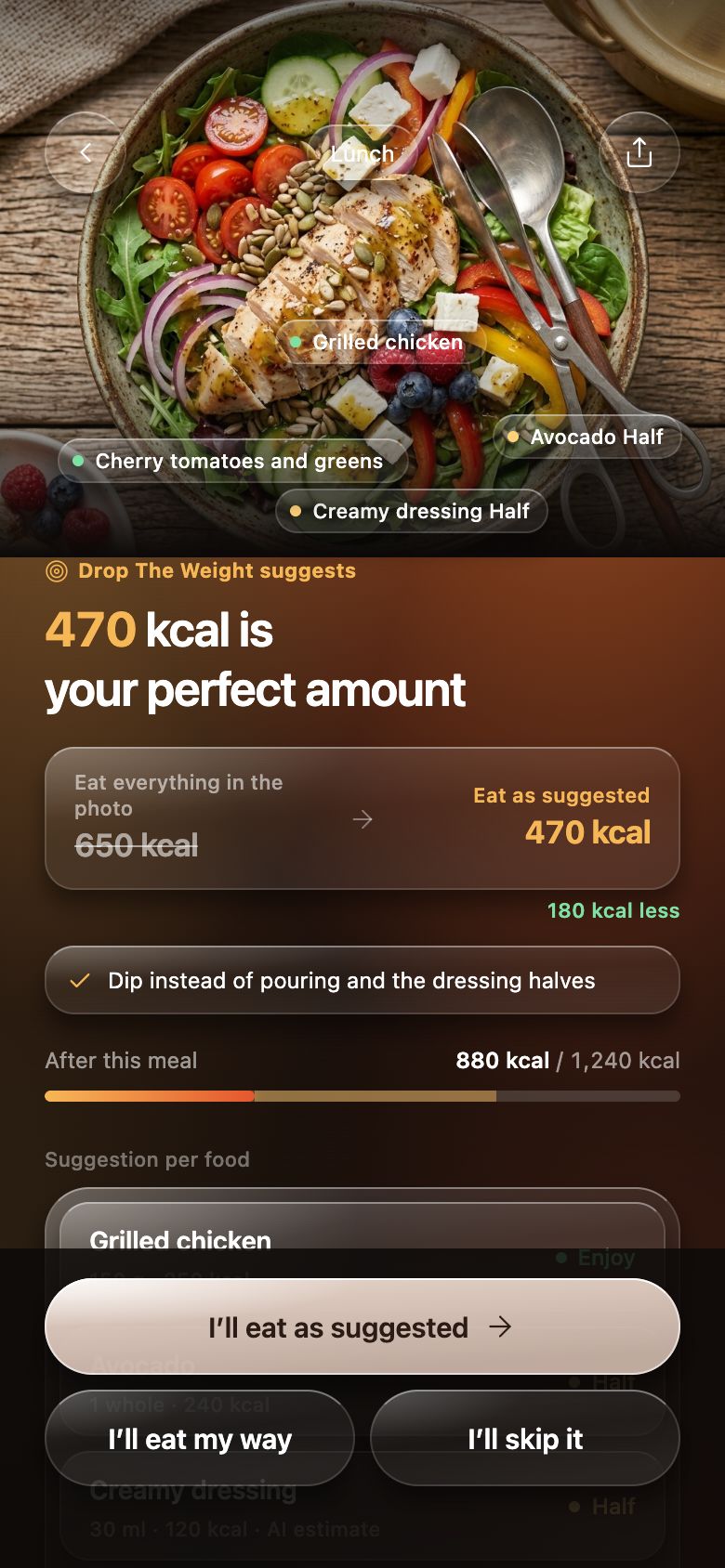
- Snap one photo before you eat and see calories, carbs, protein and fat for each dish on your plate.
- For packaged foods like chips, frozen meals and instant noodles, scan the barcode or nutrition label (barcode scans are always free).
- It suggests Enjoy, Half or Just 1/3 based on the calories you have left today, so cutting back on salty dishes can start with the portion.
Snap before you eat
One photo tells you Enjoy · Half · Just 1/3 for every dish
AI estimates each dish and fits it to the calories you have left today. No sign-up needed.
 Get the iPhone appFree on the App Store · Android soon
Sources
- World Health Organization (WHO), Guideline: Sodium intake for adults and children (2012) · Sodium reduction
- U.S. Food and Drug Administration (FDA), Sodium in Your Diet · Nutrition Facts Label
- American Heart Association (AHA), Understanding Blood Pressure Readings · Sodium
- Sacks FM et al., Effects on Blood Pressure of Reduced Dietary Sodium and the Dietary Approaches to Stop Hypertension (DASH) Diet, NEJM (2001)
This article is general nutrition information and does not replace diagnosis or treatment. If you have a medical condition or take medication, talk to your doctor or a dietitian before changing your diet. Drop The Weight is a meal logging and guidance app, not a medical device.